
Project overview
The goal was to design a learning management system (LMS) tailored for interns—providing a centralized digital environment to learn, collaborate, and track progress. The platform focused on four core pillars:
- Access to structured learning materials
- Progress tracking and performance visibility
- Peer collaboration
- Instructor interaction
As the team lead, I guided the design process from business requirements to final UI, while also contributing hands-on design for critical modules.
MY ROLE AND RESPONSIBILITIES
- Team Lead & UX Designer
- Interpreting Business Requirements Document (BRD) into actionable design briefs
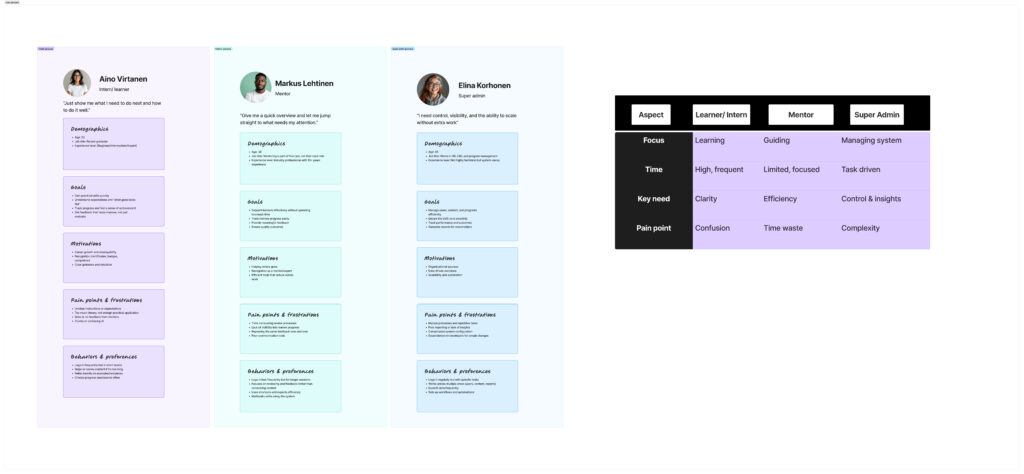
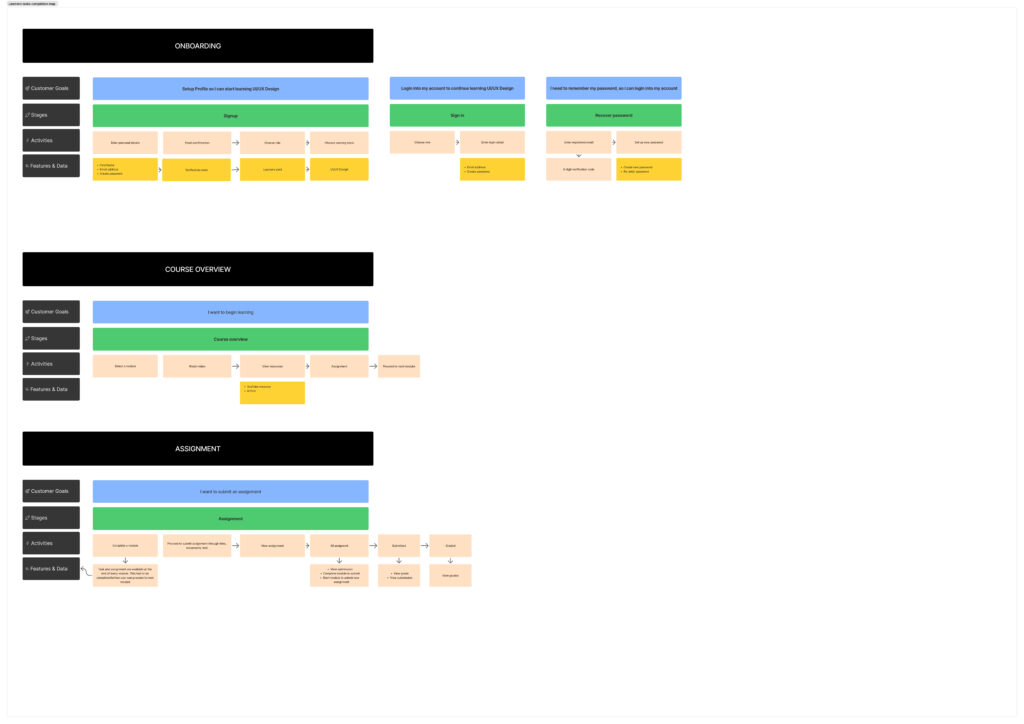
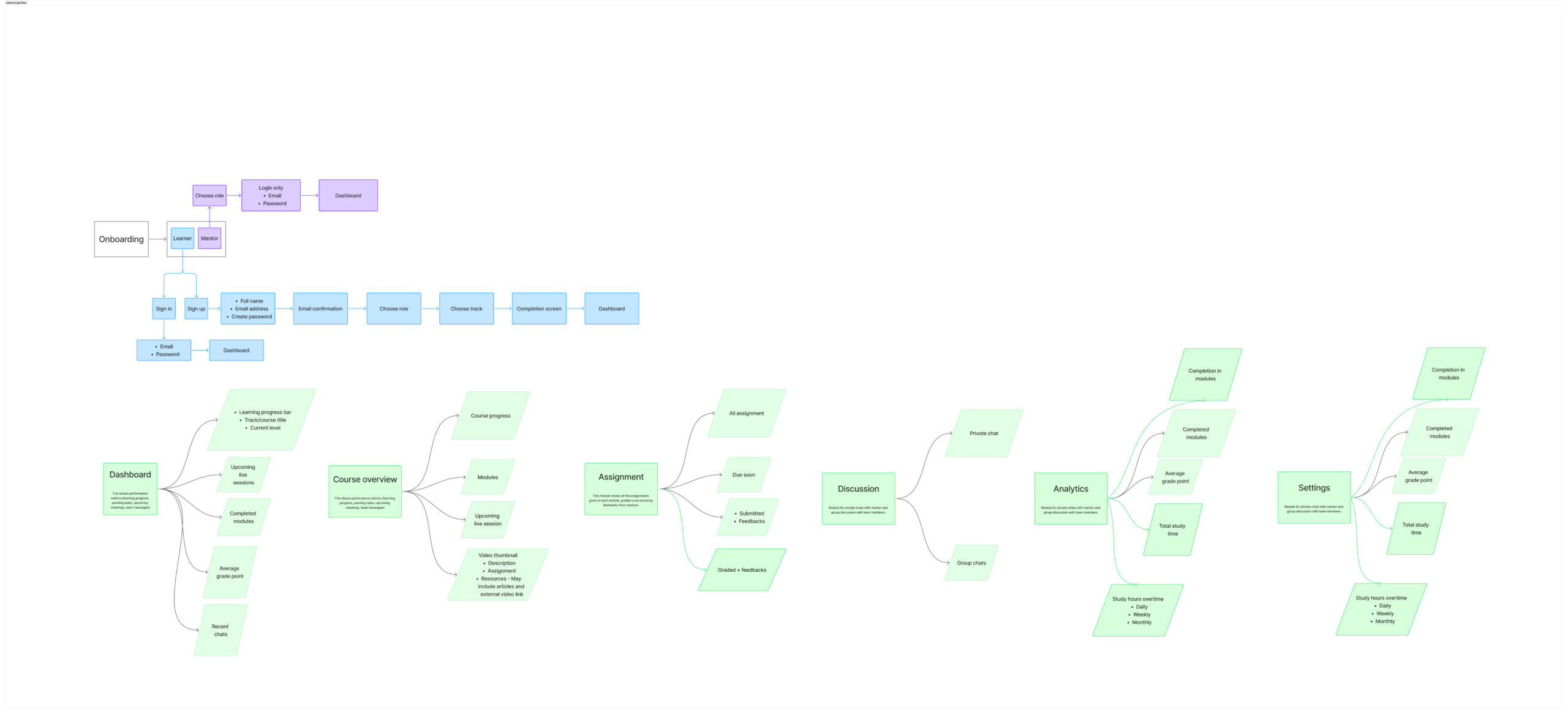
- Creating user personas, task flows, and app flows
- Defining and managing the design system
- Task delegation and team coordination
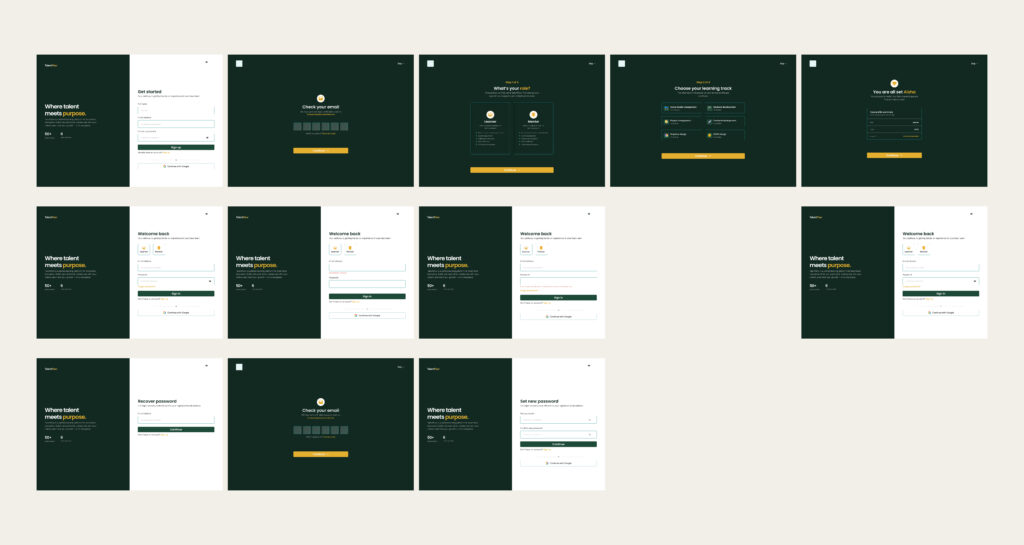
- Hands-on UI design for Dashboard, Analytics, Onboarding, and Discussion pages
Process & Key Contributions
1. Breaking Down the BRD
I translated the BRD into a simplified, shared document for designers and developers. This clarified the problem statement into key solution pillars and served as a reference for late-joining team members.
2. UX Architecture
I developed:
- The User personas to represent intern archetypes
- User task flows to map learning and collaboration journeys
- App flow to visualize navigation and module dependencies
These artifacts helped align developers early and reduced back-and-forth during implementation.
3. Design system
I created a scalable design system covering:
- Typography (hierarchy, font sizes, weights)
- Color palette (primary, secondary, semantic states)
- UI components (buttons, cards, inputs, modals)
- Spacing and grid system
- Info cards and data visualization patterns
This ensured consistency across all modules designed by different team members.
3. Task Delegation & Team Coordination
Assigned each designer an end-to-end module flow (e.g., assignments, messaging, resource library). Held daily syncs to track progress and maintain design alignment.
4. Hands-On Design Delivery
Despite being the lead, I stepped in to design the following:
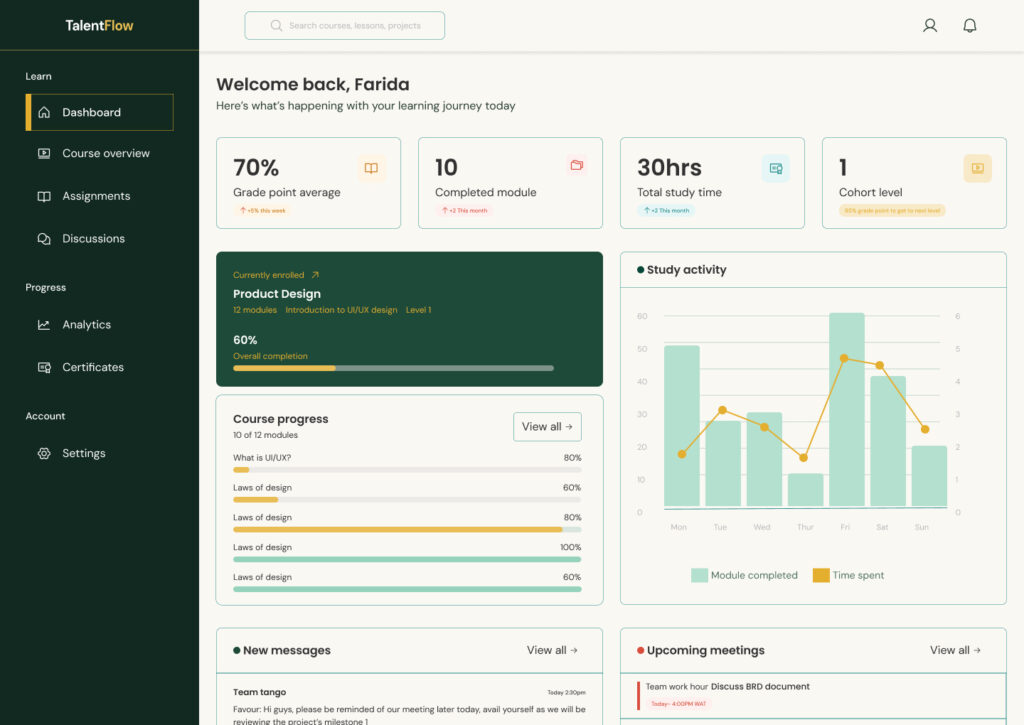
- Dashboard module (personalized overview of courses, deadlines, announcements)
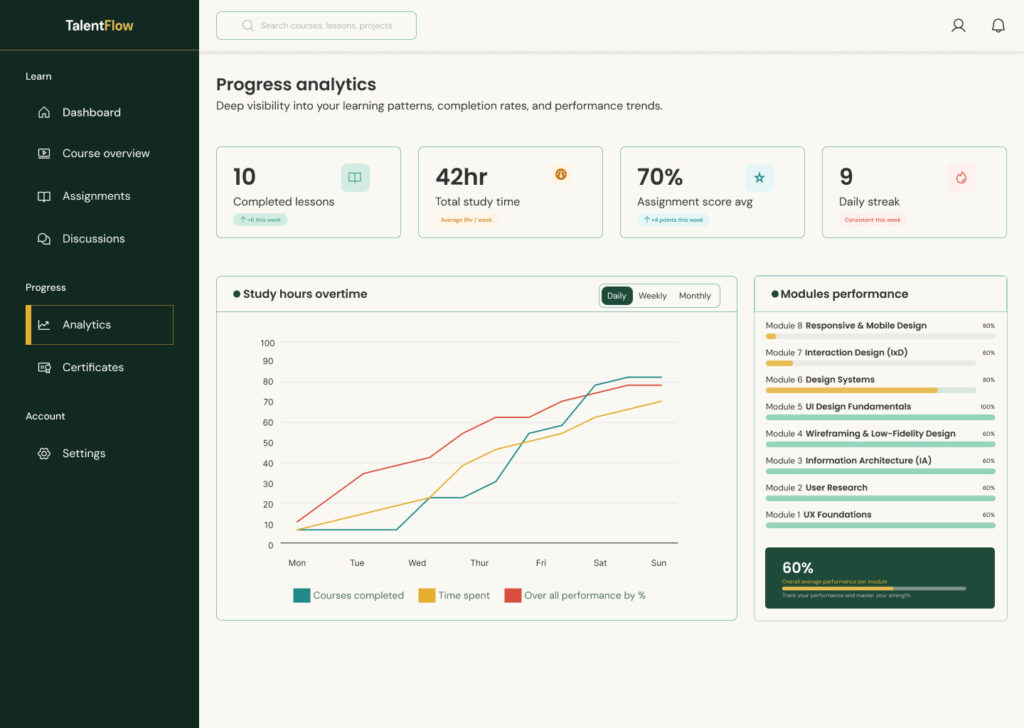
- Analytics module (progress charts, completion rates, mentor feedback summaries)
- Onboarding pages (profile setup, goal selection, platform tour)
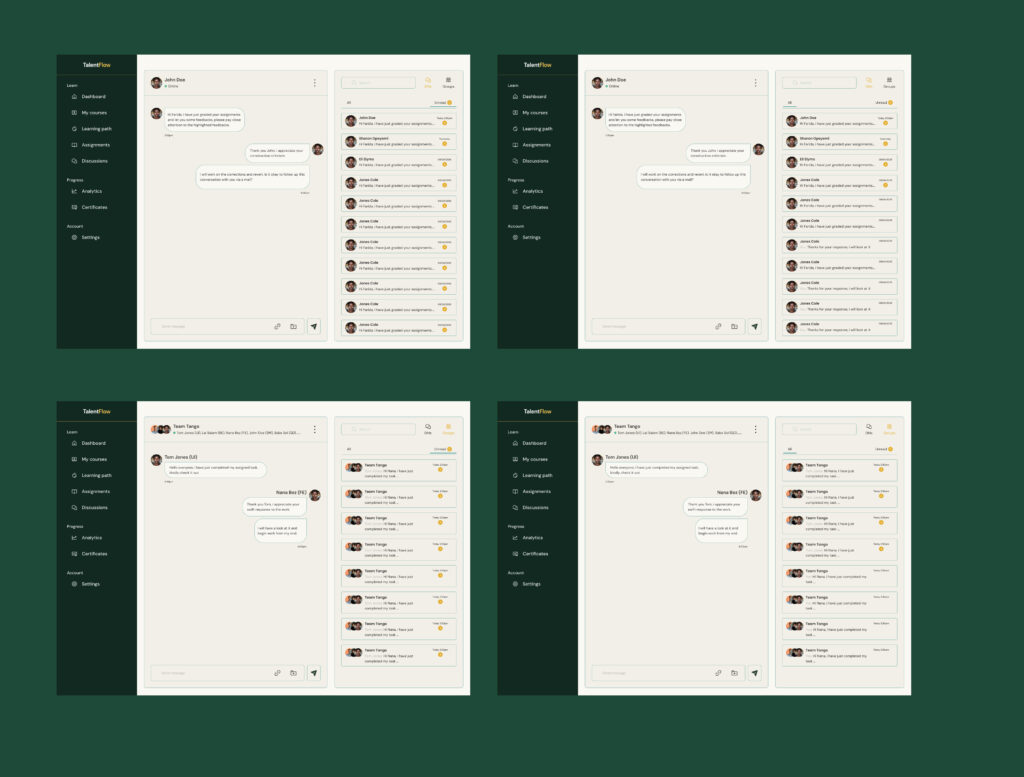
- Discussion page (threaded conversations, tagging mentors, file sharing)
This step-in effort covered manpower gaps and kept the team on schedule.
5. Outcomes & Impact
On-time delivery despite resource constraints, thanks to flexible leadership and direct design contributions.
Seamless cross-functional collaboration – The discussion module enabled interns to share resources and ask questions without leaving the platform.
Improved interaction between interns, mentors, and project teams through structured communication channels.
Enhanced progress tracking – Learners could visualize their performance and access trainings tied to real-world, project-based learning.
6. Tools Used
Figma, Miro, Google Workspace, Notion (for design system documentation)